Monday, September 8, 2014

Organizing a Successful Garage Sale

Image credit: Eastlake Times (flickr.com)
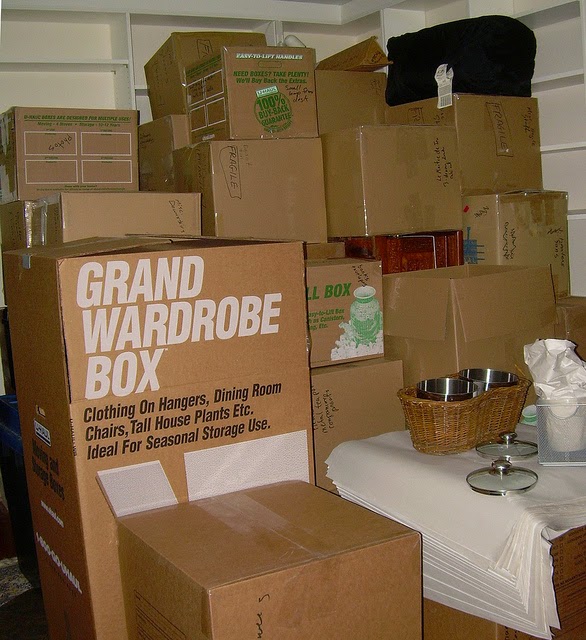
You are relocating soon and you’re working on finalizing your list of things to bring. Along the process, you realize you no longer need some items and you want to get rid of them. Want to make some extra cash at the same time? Then having a garage sale can be an excellent idea!  

Basically, a garage sale means selling some of your belongings for a cheaper price that you got them. As the name implies, this is typically done in the garage but do not feel limited by that definition. You can have it in your yard and call it a yard sale or something.

What’s most important here is that all the items you want to sell are properly displayed. For example, you need to make price tags for every item. Doing this will help minimize the instances wherein different buyers will bug and ask you for the price of the same item. Also, this is a good way to ensure that you have a fixed price in mind for every item. You can price everything with the help of a marker and several pieces of paper.  

Of course, itemizing can make your items look more organized. Everything will look better if you put them in the right places. For instance, hang all the clothes together and put all books and magazines in a table. You can even go further by using size dividers for the clothes so that buyers will not have to look through every single clothing item. Just put a sign that specifies the sizes and that will be extremely helpful for buyers.

Whenever possible, offer in bundles to make it more attractive for buyers. You may have lots of magazines, comic books, and other reading materials at home. Instead of selling them per issue, you may want to sell them in bundles so that you can dispose them quicker. 

Do not forget to get help from family members. You’ll likely have your hands full as neighbors and passers-by visit your place. It will be most effective if you can have some of your children or relatives deal with some of the clients. You can avoid feeling too overwhelmed if you do this.

With adequate planning and preparation, you’ll definitely have a successful experience in organizing your garage sale. Although some would argue that selling online is still better if you want to earn more money, an old-fashioned garage sale is still better because you’ll have no competitions at all - except, of course, if your next door neighbor is also hosting a sale. You’ll have extra earnings you can later use as you relocate to your new home!

Wednesday, September 3, 2014

What to Bring and What to Leave Behind

Image credit: Sean Oliver (flickr.com)
As the title of this article suggests, I am hoping to provide some helpful insights for those who will soon be relocating. Without a doubt, everyone who needs to pack things and move to a new home has encountered this question. This can be particularly difficult to answer especially if you have accumulated a lot of stuff throughout the years.

Here are a few more questions to help you decide whether items are worth-bringing or not:

Are you emotionally attached to it?

Perhaps most important of all, you need to assess whether an item is important to you for emotional reasons. Is it a souvenir from an important life event? Has it been given by someone? Is it a favorite object from your childhood or something that has value to your entire family? If so, then those are valid reasons to keep the item. 

Is it still useful to you?

Aside from emotional attachment, another determining factor is whether an item is still useful for you or not. Think! When was the last time you really used the object in question? If, for instance, it’s a pair of shoe you are no longer wearing then it’s probably best to throw that away.

Must-Brings

Of course, there are some things that should definitely be brought with you as you relocate. Personal and financial documents are never optional. Passports, birth certificates, IDs, loan documents, mortgage papers, and others. Jewelries and antiques are also important because they are valuable. If you have any collection such as figurines, books, or anything else, then those should also be included.

As for the rest…

Some items are optional and so you might want to get rid of them either by selling or donating them instead. If you’re feeling generous and if you can find a local organization that needs, say, used clothing, then it will be a terrific idea to get in touch and bring the goods to them.

Alternatively, you may consider selling your stuff. If you have the convenience of extra time, you can offer the items online through eBay or even Facebook. If this is not possible, another option is to organize a garage sale so that interested buyers can drop by and buy what you have.

Speaking of which, I’ll be writing an upcoming blog about how to organize an effective garage sale. I will be covering the basics of how to make such an event successful so be sure to stay tuned for that.  

Sunday, August 31, 2014

5 Tips to Make Relocating More Efficient

Image credit: Joanna Bourne (flickr.com)
Moving to a new home can be quite exciting – and tiring, at the same time!

Besides, this can require a lot of work on your end. Preparation can be very time-consuming and so it should be done right. Read on and I will give a few tips about how you can make your move efficient and hassle-free.

Pack Early

First off, you have to understand the negative consequences of last-minute preparation. A better idea is to get started with your packing chores at least several weeks before the scheduled departure. Create a list so you can plan ahead. Try to figure out what items should be brought and which ones should be left behind.

Plan Your Move

Of course, you also have to plan the move itself. For shorter destinations, it is advisable that you hire a truck where you can put all your things. For far locations, the preferable route is to look for house movers. You may also reduce the quantity of stuff you have to carry by shipping them to your new address. Just be sure to do this with adequate planning plus it’s important that you work with a reliable provider.

Contact the Movers 

Speaking of movers, communicating clearly with them is the solution to having a successful experience. Be specific about the details in order to help them determine which approach is most appropriate. As much as possible, tell them the quantity of heavy items you need to bring (such as your refrigerator or your piano) so they have a clear expectation of things.  

Label your Boxes

As you use boxes in packing your things, remember the wisdom of labeling each one. Writing “books,” “clothes,” and/or “glassware” can make a big difference. Unpacking will be so much easier as you arrive in your new home. Not to mention that arranging the boxes for travel can be done more effectively with the help of these labels. You will have no worries about breaking fragile items because you stored them in the wrong places. Also, be sure to put number codes such as “1 of 2” to indicate how many boxes are there for books, for instance. This will help prevent unexpected losses during the trip.

Prepare a First Aid Kit

This may not sound like a typical tip for relocating but yes, it is important to have your first aid kit at hand. You’ll never know when someone may drop a breakable object or gets accidentally hurt by sharp items. Put the kit somewhere you can easily access them whenever the situation calls for it.      

Friday, August 8, 2014

Cellphone Do’s and Don’ts

I think I’ve posted a lot about landline lately and haven’t found the time to write about its mobile counterpart.

So for this new entry, I’ll focus on proper cellphone usage. As the technology continues to be widely popular, I am sincerely hoping that more and more users will understand the importance of responsible ownership.

Here’s a short video that covers the basic rules of mobile etiquette:  


Sunday, August 3, 2014

Mind Your Manners – The Basics of Phone Etiquette

Image credit: Pete (flickr.com)
In these days of instant messages, likes, and tweets, they say that basic phone etiquette is becoming a lost art.

Common courtesy is really important to maintain whether at home or at work. It greatly enhances communication and makes a positive impression for you. Remember that you are representing yourself, your family, or your company when you pick up the phone.

Here are some proven reminders if you want to project a professional image or if you simply want to be a little more pleasant to converse with.

Begin with a greeting

On the top of my head, I can fondly recall a friend’s young daughter who always said “Hello, this is Violet. Good Morning!” It’s really cute and nice plus it’s actually slightly funny because she always said that - regardless what time of the day I called.  

The formula is there, however. Simply identify yourself and then say a short greeting. In business settings, you may include your company name and, when necessary, your department, something along the lines of “Hello, this is Felicity Smoak. IT Department of Queen Consolidated. How may I help you?”

This is always a good way to start a conversation and yes, that’s an Arrow reference right there.

Pay attention to your tone

Although the caller will not see any facial expression, your emotions will still be pretty apparent – thanks to the tone of your voice. Smiling while taking a call might seem like a silly idea but it actually affects your tone. If you doubt this, then you can try recording your calls for proof and you will surely notice a big difference with how you sound like as you speak with others over the phone. You’ll notice that you’ll always sound happier as you smile. Also, do not eat any food or chew gums while talking.  

Choose your words carefully

Again, the main point of exercising etiquette is to ensure that the callers have positive experiences as they contact you. So aside from proper greetings and voice tone, using the right words can be a huge factor.

Using formal words are highly advisable, especially when taking business calls. So instead of saying “Who’s calling?”, “May I know who’s on the line?” is always better. “Can I put you on hold?” is preferable over “Hang in there for a minute.” You get the idea!

Well, that’s basically the basics of phone etiquettes. I’ll try coming up with a video next time so be sure to come back. Also, feel free to leave a comment below in case you agree or disagree with some of the points I raised – or if you have a few pointers of your own!

Tuesday, July 29, 2014

Important Features for Cordless Phones

Image credit: Nicola Romagna (flickr.com)
There’s no denying that cellphone popularity have achieved an all-time high in our times. Despite that, landline phones are still very useful and it’s still a wise idea to maintain it - or to start subscribing for the service, in case you still don’t have one. 

Compared with mobile phones, telephones actually provide users with several advantages such as consistently clearer call quality. You also wouldn’t experience any dropped calls and weak signal as you would when using a cellphone.  Simply said, they are much more reliable when it comes to emergencies.  

Sometimes, cordless phones are considered by some as the “grandfather” of cellphone technology. These handsets are typically slim plus they present you with the comfort and flexibility of using them around the house. No need to stay stuck in one place because of unnecessary telephone cords! 

Whether you are planning to get a new subscription or are considering switching to a different provider, here are some features you should keep in mind as you avail of phone services.

First, decide whether you need a single line or a multiple line. 

If you only have one phone line at home and you don’t have plans of getting additional lines in the near future, then a single line phone should be exactly what you need. On the other hand, those who have two or more lines may want to go for a multiple line package. This is much more advisable if you need lines for your home office or for the room of a family member. Multiple lines also give you additional benefits such as 3-way conference feature, intercom, and unique rings for every line.    

Next, determine the frequency range.

As mentioned earlier, cordless phones are very convenient to use. You can move pretty much everywhere in your home and still be able to take or make calls. It’s all because of frequency technology utilized by cordless phones. Generally, you have three options.

1.9 GHz is the most widely-used frequency because they operate using less-crowded frequency when compared with the others. Range and sound quality are unmistakably better. A 2.4 GHZ frequency is also good but do take note that phones with this range often have to compete with signals from Wi-Fi. If you do have a Wi-Fi network at home, you may want to go for 5.8 GHz.  

Finally, check out additional features. An LCD screen would be nice plus caller ID can be a very practical feature. Illuminated keypads may not seem to be anything revolutionary but believe me - dialing in the dark will be significantly easier as you take advantage of this feature. 

Go check out different companies to know which ones can meet your needs. Take a look at several home phone providers via Connect Now for more information.


You may also like:
Important Tip on Buying Cordless Phones (ebay.com)
Cordless phone reviews (which.co.uk)

Friday, July 4, 2014

Rapid Increase of Mobile Phone Use

Despite the repeated emphasis I’ve given that telephones are still significant in our times, the fact stands that mobile phone technology’s popularity to rise in the coming years.

This, of course, is common knowledge for most people these days but allow me to dig deeper by giving you specifics and relevant statistics. Here goes some data I gathered as I recently did a little research about telephone and wireless use of homes in America:


While these statistics are for the United States, I'm guessing it’s safe to say we have the same trend the world over. Wireless technology truly has nowhere to go but up. Still, I stand by my belief that it doesn’t necessarily mean that telephones should be ignored anymore. They can co-exist and users (whether commercial or residential) will ultimately be at the advantage if they use both types of technology.

Monday, June 30, 2014

5 Reasons Why Landlines Are Still Relevant

Don’t get me wrong. I do love mobile phones. In fact, I own more than one and I use them heavily each day. I definitely enjoy the convenience of staying in touch with everyone wherever I go.

Despite that, I am a firm believer that landlines are still very important to have these days.

Watch this short video and let me show you what I mean:


Do you agree or disagree that phones are still necessary in these days of smartphones and other devices? Share your thoughts in the comment section and let’s talk about it.

Thursday, June 26, 2014

Reducing Your Telephone Bill

Image credit Tomomarusan (commons.wikimedia.org)

Most people nowadays heavily rely on mobile phones for their daily communications to the point that they sometimes forget they have a landline connection at home.

Telephone bills, however, come on a regular basis, usually every month. If often neglected, this could lead to problems such as having an expensive bill or, worse, permanent disconnection of the service.

If you want to retain your phone line connection at home and avoid huge monthly bills at the same time, allow me to share some pointers here for you. This comes from my personal experience so listen up. These tips could definitely help you save money!

1. Get rid of the voicemail

Telephone companies often encourage their subscribers to take advantage of voicemail features. Actually, you can get rid of this extra service. An answering machine pretty much does the same job. If you’ll do some computations, you’ll even discover that it’s often less costly to purchase your own answering machine than to pay for voicemail every single month.

2. Switch to a per-call package

Since we’re mostly using mobile phones, a per-call plan is definitely a money-saving option. Inquire with your provider if this alternative is available. This is very effective because you will only pay for the times and days you actually use their service instead of having to pay big bucks all the time.   

3. Use the internet when possible

Another idea is to take advantage of online technology whenever possible. Try to avoid excessive phone use because frankly, that’s not the only way to get in touch with people. Take note that international calls, in particular, are way more expensive than local calls.

For example, you may want to use Skype and other similar services as you make calls to a different country. If you have a webcam, then that’s even better because you can have video call.
Electronic mail also lets you send messages anywhere in the world. Your message will hit the recipient’s inbox in seconds. This also gives you the chance to practice writing long letters - a forgotten art in these days of SMS prominence.

Conclusion

An additional tip here is to refer to your monthly statements and try to determine which calls are costing you expensively each month. I did this several times and upon identifying the culprit, I made adjustments to my usage (I kept those calls as brief as I can) and it surely helped me decrease my phone bills.  


You may also like:
Telephone Savings Tips (puco.ohio.gov)

Tuesday, June 3, 2014

Build a Proper Shed, from the Outset

Photo credit: Christine (flickr.com)

Only neat freaks avoid clutter from piling up, and you're probably well-acquainted with the piles of knickknacks on your garage or basement. You can get away with clutter if it's tucked away in a forgotten corner in your home, but you have to admit your well-worn and used tools need space to call their home. That being said, there's a concern handymen and homemakers have in common: the shed or at least a small alternative to it. It's the ultimate solution to problems of backyard organization, and you have to build one of your own if you want workspace and storage that's functional and easy to the eyes. Building a shed should be an invested effort, and even if you can avail of easy-assemble sheds at a home depot or online store, you still have to make sure the space is prepped and the project is properly executed.

Location Is Crucial

Your shed will be a standalone structure in your garden or backyard, so you have to choose the best spot to build it. Choose level ground found high up on a rise in your property, make sure water doesn't collect and sludge around its foundation. The right spot saves you time, costs, and effort building drainage around and away from your shed, and it's also displayed as a prominent structure on your property. Sludge rots and rusts wood and metal, even if you invest in a solid foundation. This is all the more important if you're building a shed large enough to serve as your private workspace.

Prerequisites to Building

Believe it or not, but such a small project requires the approval of a building inspector just the same. It's important that you're aware of this at the outset, be friendly with yours and make the process as smooth as possible. A building inspector should be your best friend throughout the process, reviewing the plans, checking out the site, and making sure everything complies with local building codes. You'll also get free advice if ever your shed plan doesn't meet the standard. At the very least, your inspector spares you from building a costly mistake, so consider yours a blessing in (heavy) disguise.

A Stable Foundation

Your shed's foundation makes all the difference in stability, and you can choose between solid bricks or pressure-treated timber for yours. Depending on the size of your project, the foundation should be laid along the grade. Avoid using hollow bricks as these eventually buckle under the pressure of the structure. For larger projects of at least two hundred square feet, you'll need a permanent foundation of poured concrete. Consider shed building advice you can find online if you’re up for something more elaborate. You'll have to dig deep for the poured concrete piers and the timber posts. The specifics are more involved, though, and you can check with your local building codes for details on laying the right foundation.

Building sheds shouldn't be too troublesome if you start right it right. While it's true that the simplest shed needs no involved prep work, no red-blooded handyman will ever settle for something that's second-rate and substandard. Settle on the best design and build, whether you're doing it from scratch or choosing the convenience of easy-assemble projects.

You may also like:
How to Put Up a Garden Shed in the Backyard (videos.huffingtonpost.com)


Thursday, May 29, 2014

An Infographic on Saving Your Energy Bills


It’s never fun to pay astronomically high bills especially when you’re in the middle of planning your yearly family vacation. Sometimes we get too busy with work that we forget to track down our electricity usage at home and then wonder why we are paying so much. We all try our best but sometimes our best is just not saving us enough money as much as we’d like.
Believe it or not, really simple things like turning off the lights when they’re not in use or keeping the curtains closed at night to keep the heat from escaping already goes a long way towards lowering your energy consumption and eventually lowering your energy bills. If you work at home and tend to keep your computers and TV on standby to save time, you may want to consider turning them off when not in use because it’s not like it will take you hours to turn them back on again.

And last but not the least, you may want to make sure your insulation is thick enough to keep the cool air in especially during the warm months. You may want to have an energy audit done on your home as well to pinpoint the problem areas to further lower your bills.


Sunday, May 25, 2014

How a Home Energy Audit is Done

Photo credit: Green Energy Futures - David Dodge (flickr.com)

Having a home energy audit done on your home helps you save on your energy bills because an expert will go around and pinpoint areas around your house that may be costing you too much energy and also tell you how you can keep it from doing that.

Among the many things they will point out will be air leakage, which is can not only cause you to pay high bills but also cause your home to be uncomfortable and unhealthy to live in. Energy audits will identify where the leakages are taking place if any, and offer effective solutions to the problem.

Having an energy audit done will also increase your home’s resale value and marketability because it gives potential buyers insurance that they are buying a home that is energy efficient and won’t cost them an arm and a leg to maintain. It will also uncover hidden problems that can otherwise turn into health risks like mold and mildew growth.

Believe it or not, energy audits will also tell you how much greenhouse gas your home is emitting so you’ll be able to do your bit for the environment as well. And lastly, energy audits are really a good investment because you will be able not just to have an energy efficient home for as long as you live there, you will also enjoy a healthy tax return of about 16% each year after taking into account the money you spent on home improvements.

Saturday, May 24, 2014

What You Should Know Before Choosing Gas Suppliers

Photo credit: Michael Tapp (flickr.com)

When we first moved to our new place, it wasn’t just packing up the life we knew and starting over somewhere where we didn’t know a soul that bothered us but also the fact that we had to find new utility providers as our current one didn’t provide service in the area we were moving to. My wife and I already had too much stress going on so really, we didn’t need more grief to be honest.

But grief we did experience because who knew how difficult and challenging it could be to find new gas connection service? About a month before we were scheduled to move, we were already taking turns calling up a few companies we came across online and some that were recommended by friends.

Too many high rates and a few rude customer service representatives later, we came across a moving home company that offered to not only provide us with a list of reputable providers in the area we were moving to but also take care of the connection and needless to say, by the time the last box was deposited into our new home by the movers, we already had electricity, water, phone, internet and gas service going on.

While not many moving home stories end up happily like ours, it doesn’t mean you will be doomed to a dark fate when it’s your turn to experience moving day. Planning ahead and some exceptional organizational skills can ensure that moving day isn’t as stressful and drama-filled as you imagine it to be. That and hiring moving home companies who offer free services on the side like connecting your utilities and you’re well on your way to starting your new life.

However, I have to admit that choosing our utility providers was tough. I was concerned about high energy bills and while we did our best to conserve our energy consumption and had the house specifically built to allow for excellent heating and cooling conditions, there was the matter of making sure everything else was peachy.

Photo credit: Phoenix Energy (flickr.com)

If anything there are tons and tons of utility providers you can choose from, all claiming to give you the best rates and the best service but that makes it all the more confusing doesn’t it? Shopping around for the best rates is the first thing you need to do after you’ve determined how much you can afford to pay. Determine how much you are paying with your current provider and compare that with the rates your potential suppliers are offering. Figure into the costs the discounts you can get and cancellation fees if you decide to end your contract early. Getting the best utility services for your home means being able to pay for everything within your budget so you can manage your household expenses well. Make sure you read the fine print on your contracts and understand the terms and conditions clearly before signing on the dotted line.  

One thing that you should do a lot of when shopping around for the best utility providers is to ask questions. Remember that if something is not part of your contract, then it is not part of the plan you signed up for so you need to make sure that everything you agreed to is written in your contract. You can always ask for an offer summary from your utility companies  and remember that you are entitled to a cooling-off period before finally deciding on the company you want to sign up with.

You might also like:
Choosing Utility Providers (neighborhoodlink.com)


Thursday, May 22, 2014

How to Shop for Portable Garages for Your Home


Often when people buy homes, one of the things they put the least consideration for would be their garages. They will think of adding rooms for guests or maybe a garden shed as extra storage space for their garden tools or maybe even as a work space but they will never think of adding a portable garage for any additional vehicles they might add to the one they already have.

These days, however, more and more people are adding to their vehicles as a kind of investment. Second, people develop hobbies and as such, they buy motor boats, motor cycles, mountain bikes and RVs to be able to indulge in those hobbies and these are things you cannot fit in your built-in garages. For these reasons, the popularity of portable garages has grown so much but people who buy them can actually find themselves confused about what style is best for them and their needs. Here then is our handy guide on how to choose the best portable garages:

1.   Find the one that’s just right
Size matters and it especially matters when you have to fit three cars in one small space. Finding the right size for your portable garage isn’t as intimidating as you think, as long as you know these rules you need to follow in order to select the perfect garage size:


  • The number of vehicles you need to protect
  • The size of the vehicles you need to protect
  • How much space you have for it

It is important to realize that each vehicle type will need its own kind of space and that while your measurements of the dimensions of each vehicle don’t need to be exact, you will need to leave just enough room for maneuvering especially for RVs and boat trailers which can be a bit unwieldy.

2.   Find one that’s made from the best materials

When you search online for garages for sale, a big part of your consideration will be coming from the materials it is made of particularly with the frames and covers since this affects the weight, strength and price. A popular choice for garage frame material is steel because it assures superior durability. When looking for steel frame garages, the rule of thumb is the larger the diameter of the steel tubing, the stronger your garage will be.

As far as covers go, the best material is polyethylene because it does a better job of filtering out harmful UV rays that can make your car’s paint fade. However, it can be quite expensive if you’re on a tight budget so you’ll need to decide on what’s more important: economy or durability. You will also need to make sure you are aware of construction limitations for your portable garages  like the height of the eves which is usually 2.5 meters and the extent of space covered by the construction.

3.   To Set Up or Not to Set Up My Own Garage, That is the Question

Most people prefer to just browse for easy-to-install portable garage kits online that they can set up themselves rather than hire professionals to do the job for them obviously to save on labor and construction costs. Also, buying portable kits means you don’t have to get any kind of permits but you will still need to check for local zoning laws concerning garages in your area to avoid getting into trouble as there are rules that apply to such outbuildings.

In order to fully protect your vehicles from harsh weather conditions, you may also want to consider investing in some important accessories with your portable garages like sidewall or enclosure kits which fully enclose your garage space like a storage garage would. Inclusions vary so you need to thoroughly check what’s included in your kit before making the purchase. If you’re planning to use your garage as an entertainment area, then sidewalls are a great accessory to invest in especially if you do a lot of entertaining and don’t want to hold your parties inside your house. They are often a regular inclusion in garage kits but you will still need to check to make sure.


You might also like:
Garages (fema.gov)

Monday, May 5, 2014

How to Build a Farm Shed


Photo Credit: Simply Sheds

Space is something everybody needs, be it personal or otherwise. Homeowners in particular, who have the tendency to accumulate more stuff than they could possibly need, always seem to need storage space and when they run out of rooms to stash their memorabilia in, the next thing they turn to are sheds.

Sheds as you know, are that single-storey structures you can buy as prefabricated kits or can build with your own two hands, provided you have enough construction know-how. Sheds used to be built just for that purpose but these days, sheds can also double as home offices, art studios, play rooms, cabanas, etc. One thing that hasn’t changed is why we need sheds and why they are still the perfect solution to any space dilemma.

In addition to memorabilia, garden tools and equipment also take up a lot of room and this is why people often consider building garden or want to learn about farm sheds mainly because it suits their needs. With the option of buying these sheds pre-made, it has become even easier to decide on getting one primarily because it also suits their budget and there is no need to apply for any building permits as long as you are sure it adheres to local building codes.

To start building your farm shed, you need to decide whether you really need the additional space or if you can make do with what you have at present. Make sure you also adhere to your local construction laws or codes concerning large sheds as there are farm building and structures specifications in place so that you can make the most out of your farm sheds. Next, measure the space you want to erect your farm shed in for length, width and height and decide whether you want it connected to the main home or as a stand-alone structure. Most people find it easier to have their sheds connected to the main home for easy access.

Plan your floors based on what you will be housing inside the shed – if you are planning to park your riding lawnmowers, huge leaf blowers and other heavy-duty equipment, then a framed floor with joists and ¾ inch plywood is a safe bet. The last thing you need to decide on is foundation – you can use cement foundation which is the cheapest option or a dug-post foundation.

The next step is to build your foundation. You can start either by using short posts to connect to your joists and concrete blocks that will raise your shed from the ground or you can dig post holes into the ground and attach the joists to the outside of the post frame, bearing in mind that your joists should be at least 16 inches apart. Once they are laid, you can either lay a plywood floor or decking material over the floor and while both are suitable, plywood is recommended due to its strength.

Building a skeleton of the structure will make the body of your shed more stable. A 2x4 or a 2x6 inch construction is suitable for a farm shed project and you can start by laying two boards horizontally parallel to each other and then connecting them by laying two boards across them perpendicularly with measurements based on how tall you want your shed to be. These boards serve as your studs and should be at least 16 inches or 24 inches apart.

If you are adding doors or windows to the structure, you need to create a header on top of the doorway or window frame to prevent them from sagging. If you are creating an entryway, leave the bottom support board attached until the walls are up. When installing the walls make sure you have bracing boards or someone to hold the walls in place until you finish connecting them to each other and to the floor.

And now it’s time to add the roof. Roofs for farm sheds can either mimic a peaked house roof or a slanted roof by making one wall taller than the rest. You should remember to construct your roof in such a way that water will run down on it but will not run into the shed. This is done by laying it from the bottom up and attaching roof felt inside to keep the inside dry.

Now for the shed skin. A 4x8 foot exterior siding that is ½ to ¾ inch thick is the cheapest option any builder can go for. You either screw or nail it onto the exterior of your structure, covering everything except the holes for the windows and doors. Wood ribbing usually seals the seams.

And last but not the least, you now need to paint or stain your farm shed according to your personal preferences and install any studs, hangers or shelving units to put your stuff and tools on.

You might also like:
Yarra Ranges Planning Notes  (yarraranges.vic.gov.au)


Friday, May 2, 2014

Prerequisites to Keeping Pets for Show, Breed, Companionship

If you love animals, wouldn’t you do anything to make sure the stray and the orphaned are accommodated in the best way possible, preferably in the comfort of your home? You’re short on luck, though, unless you live in the great outdoors or you have acres of land to convert into a preserve. You can take in and domesticate as many animals as you please, but you have to ensure local laws allow you to keep the specie you’ve adopted and nursed. This wouldn’t be a problem if you’re after the usual fare of pets, like cats, dogs, or rabbits, but what if you want to assume responsibility for exotic species, those not indigenous to your location? There are rules you have to comply with and these differ by the locale. The basic principles remain between these, though.

Registration, Tagging, Neutering

Photo credit: Eric Sonstroem (flickr.com)


Cats and dogs must be registered with local authorities. The requirements vary by state, but some require you to register the animal, tag it with microchip, and then have it tattooed once desexed or neutered. Microchipping a pet is the best way to tag it. A veterinarian will insert a chip as small as a grain of rice into the animal’s flesh; this chip contains information of ownership, your name, address, and contact, as well as the pet’s breed and specie. The data on the microchip is synched with the local registry so the animal is easily verified if it gets lost and found. Neutering or desexing is recommended but not required, but the animal is marked with a tattoo on the inner ear to indicate such.

Permits for Multiple Pets

You’ll need permits for keeping multiple pets in your home, and this applies to birds as well. You can only keep several animals in a kennel or cattery, all of these must be duly registered as well. Your purpose for keeping cats and dogs determine the requirements and your responsibilities. In Brisbane, for example, you can keep up to ten cats or two dogs as pets, if the species are not kept for breeding or show purposes. Fees and documentation are required otherwise. The rules on keeping poultry and fowl species also concern the available space in your property. You can keep up to twenty fowl animals if you can cover for the 800-meter free space, as much as six fowl animals in smaller properties. Your local council has the final say on whether or not certain species are allowed to keep, depending on the circumstances.

Proper, Comfortable Accommodations

It’s important that your pets are kept in comfort and convenience. This shouldn’t be a problem if you have a sizable back yard to begin with; you can set up the kennel and cattery as temporary shelters. You’re allowed to let your pets roam your property so long as it’s fenced. Some animals always need to be confined, though, particularly birds of flight. You’ll have to build a decent aviary to accommodate the species. You can find aviaries if you’re planning to keep and tend to species of birds on your backyard. In the long run, you can’t really convert your property into a preserve for animals, but you can ensure all that are under your care are accounted for.

Related Resources:
How to Build an Aviary (videos.huffingtonpost.com)


Sunday, April 27, 2014

Efficient Energy Sources and Solutions


Photo Credit : Nicola Tramarin (flickr.com)


We only have one planet to live at. We might as well take good care of it. As residence of the planet Earth and receiver of all its beauty and glory, we have to be responsible tenants.  Thankfully, as technology and science develops, new and more efficient energy sources are being harnessed and discovered. Sustainable energy is being developed and promoted to all. Most of the energy sources that are commonly being used by nations nowadays are non-renewable energy – in short, one they it’s supply will all go down to zero. Using non-renewable energy has also contributed a lot in the deterioration of our environment. Doing nothing to address this problem will cause even bigger problems in the future. This is why renewable energy is being promoted and its development is being fast-tracked to be able to provide immediate solutions to demands of the energy market. Mother Earth has already provided us with the never ending source of energy; we might as well harness and make the most out of this. Attend Australian Utility Week on November 2014. Know more about efficient energy sources, solar and wind energy developments and what lies ahead in the energy and power supply industry. Be aware of the current trends and developments in sustainable energy solutions and sources.


Tuesday, April 22, 2014

Promoting Renewable Energy Resources


Photo Credit: Castgen (flickr.com)

Renewable energy is simply defined as energy coming from resources that can be renewed – sources that are infinite. Solar energy, wind energy, tidal wave energy from the bodies of water, biomass and geothermal energy are just some of the renewable energy bestowed to us by nature.

Nowadays, most of the countries in the world depend on fossil fuels as the source of energy. We are all aware that these sources are not renewable – they do not regenerate and someday they would seize to exist. With that, more developments in the field of renewable energy are being discovered and researched to be able to provide the whole world a different source of energy.

Some are still skeptical in using renewable energy resources. They still believe that getting energy from this sources are expensive and the technical capabilities that we have in getting power from these sources are not that enough. They are definitely wrong. Renewable energy sources are not just infinite; they are also even more affordable. Even solar energy which was indeed a very costly method to generate electricity has already improved and now has become affordable even to the simple consuming public. This industry is also a very profitable industry to tap at because of the possible job opportunities the industry offers.

Know more about renewable energy and its improvements by attending the All-Energy Australia 2014 seminar on October 15, 2014. Save the earth, promote the use of renewable energy sources.

Here is a short video about the things we do not know about Renewable Energy.


Video Credit: Jon Seed (youtube.com)


Friday, April 18, 2014

Saving on Your Electricity Bills

Is it really possible to increase your electrical savings? It is. You just need to find the right techniques in finding the perfect electrical service provider that will suit your needs. Be updated with the current trends in the electric supply industry.

Electricity is being deregulated nowadays – meaning, no specific electrical service provide can dictate the hike or price of their electrical rates without affecting their company as a whole. If electricity is deregulated, consumers are given the chance to choose among suppliers that can provide them with their electrical needs at a lower price. This makes electrical services a really fair competition between its providers.

As a consumer you can find ways to decrease your electrical consumption, thus decreasing your electric bills in the process. There are electric companies out there that offer its clients special services that include technical advice in helping their clients save in their electrical bills. Visit the Smart Electricity World Australia 2014 organized by Terrapin Pte Ltd.


Be a smart consumer and know your rights as well. You can get the best offers, deals and technical service from your chosen electrical service provider. All you need to do is ask and know the services you deserve from your service providers.

Credits: (smartplanet.com)


Sunday, April 13, 2014

Are You Making the Right Investment?


Photo credit: thinkpanama (flickr.com)

Investing in real estate properties can really become a booming business for many. Knowing the in and out’s of the business is very important to make your investments truly a success.

Know the things you have to know before deciding to become a landlord. There are a lot of things to consider, paper works to do and skills to acquire to become successful in the business.

You can really make a lot of money from rental properties. Know the difference of having a business on your own or having a partner that will help you grow the business. Discover the techniques in making a real estate property a really sellable one. Never commit the same investment mistake ever again.


Join the Ideas Exchange Training seminar in Sydney Australia on May 6, 2014 to equip yourself with the knowledge you need to make money from the rental business. Know the techniques in reducing the turn over units as well as minimizing vacancies and moving out in the residential units that you own. If done properly, systematically and with the right knowledge, you can really become one of the best business tycoons in the rental business industry. Know where to get the best deals in buying new and foreclosed properties. Create a money pit from your rental business.